
How Young people are adapting to climate change
By Chaya Nathan
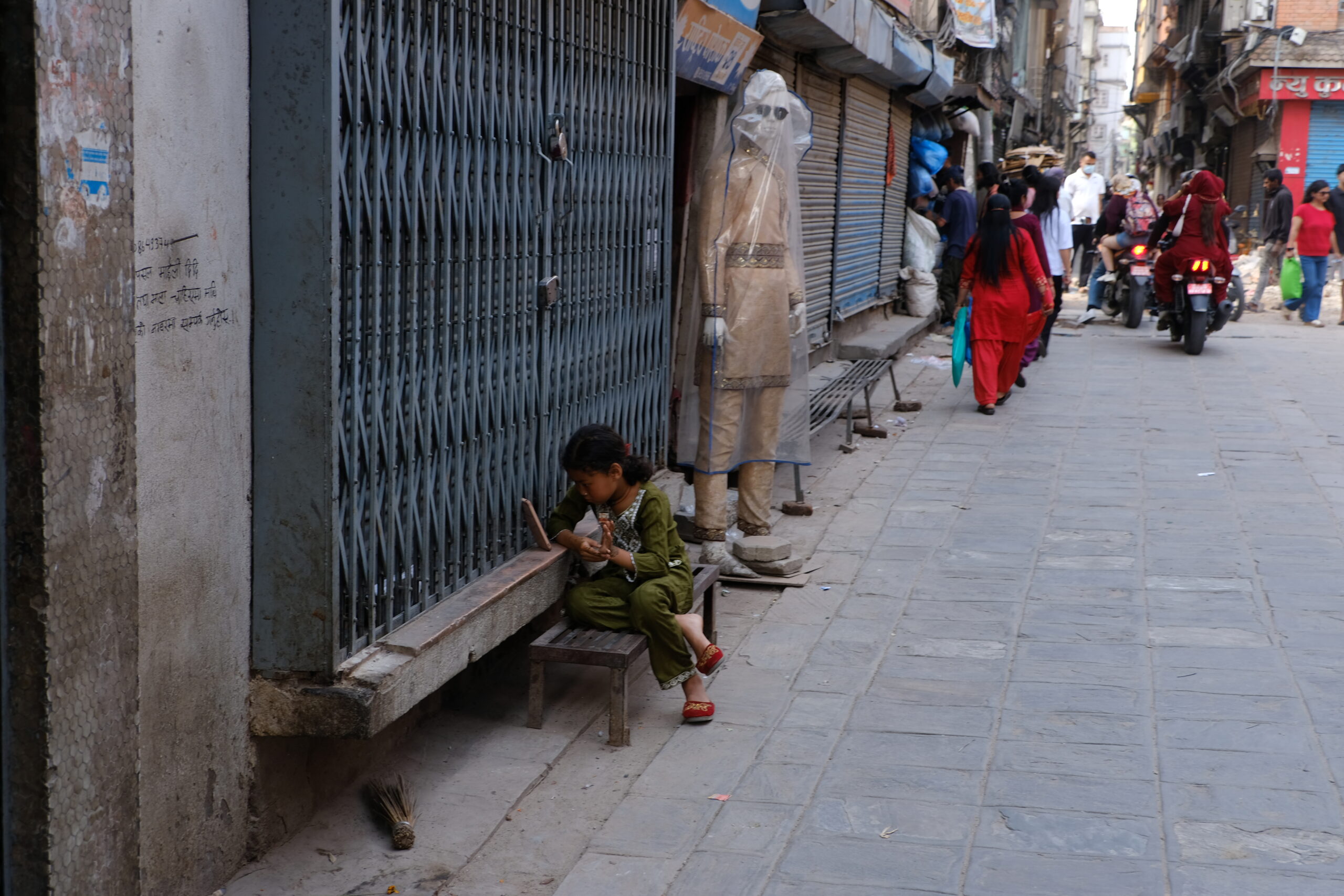
On a hot, humid afternoon in Nepal’s capital, 15-year-old Mahan Niraula scrolls through lesson notes on his phone. His school was closed for weeks last summer when heavy rains flooded roads and cut power across the valley.
When classes resumed, erratic electricity and rising heat made it nearly impossible to concentrate. “It’s hard to study when you’re worried about water, or whether the lights will stay on,” he says. “My friends are leaving. Who can blame them?”
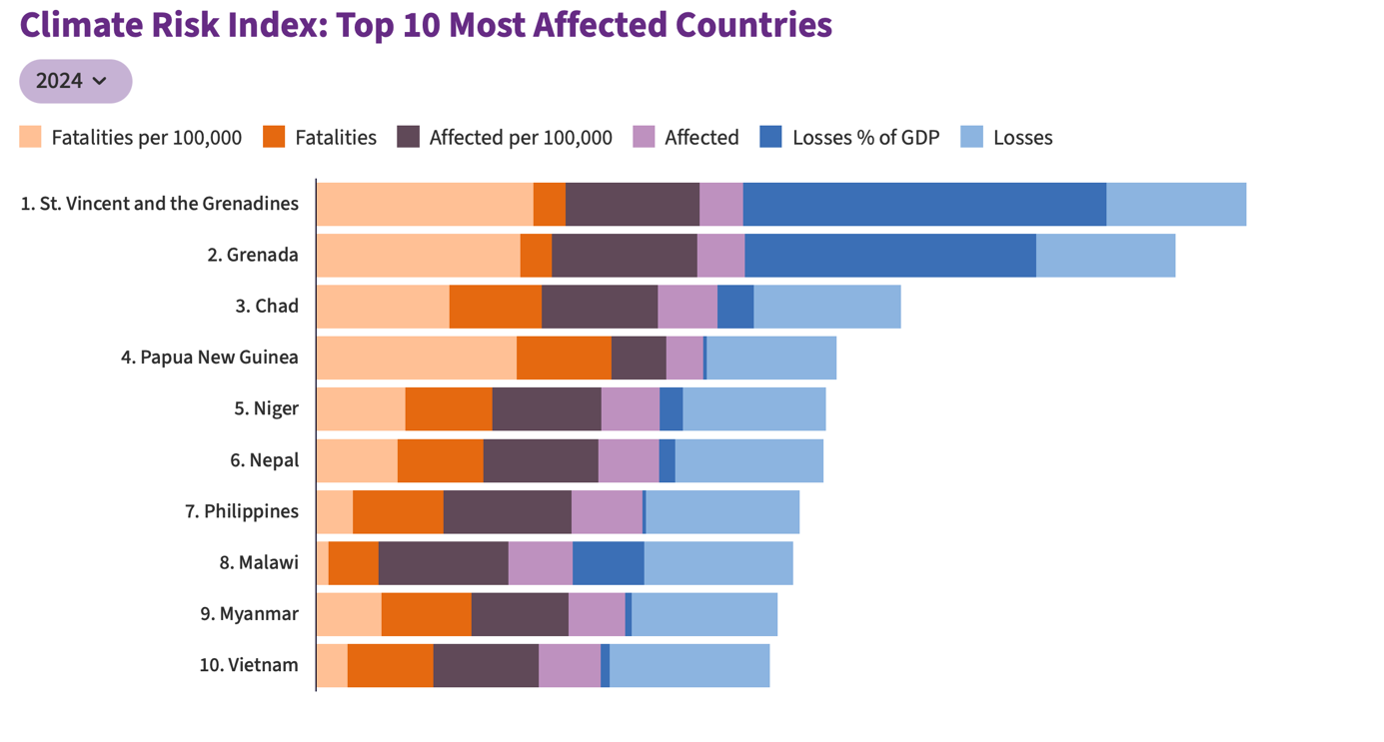
More frequent flooding, prolonged water shortages and unreliable infrastructure are making it harder for students to attend classes, complete coursework and remain in education. In some communities, roads become impassable for weeks, electricity cuts interrupt online learning, and water shortages force families to prioritise daily survival over schooling. In the last decade Nepal have experienced over 44,000 climate related disasters according to Global Climate Risks.
For many young Nepalis, adapting to the climate crisis has become part of everyday life. Some have switched to remote learning where possible, while others have delayed or abandoned their studies altogether as extreme weather events become more frequent and severe. What was once considered an occasional disruption is increasingly becoming a defining feature of growing up in one of the world’s most climate-vulnerable countries.
Nepal is among the countries most vulnerable to the effects of climate change because it is a part of the Himalaya, Karakoram and Hindu Kush regions, it stores more ice than many parts of the world. Rising temperatures are accelerating the melting of Himalayan glaciers, increasing floods and unpredictable monsoon seasons are affecting agriculture, infrastructure and access to essential services. For many communities, especially in rural and mountainous regions, these changes are reshaping daily life and creating growing challenges for education, livelihoods and public health.
Laurie Goering, a researcher and writer in extreme heat for NGO, heat resilience Action (HERA) said: “It is only going to get worse, people are not taking the climate crisis seriously, it is happening now, people are constantly being effected, and younger generations shouldn’t have to adapt, they haven’t caused it.”
When talking about what effects the current climate has in countries like Nepal where we are already seeing the effects of climate change Ms Goering said:
“Extreme heat due to climate change is already making it difficult for young people to concentrate, study or work safely, particularly during prolonged heatwaves and hotter summers.”
Recent statistics of greenhouse gas emissions revealed that Nepal contributes about 0.08 per cent of global greenhouse gas emissions, yet it is widely recognised as one of the country’s most vulnerable to climate change.
The environmental impacts are well documented. Less understood is how those changes are shaping the lives of Nepal’s younger generation. Climate change is no longer simply an environmental issue. For many young Nepalese, it has become an education issue. An employment issue. And increasingly, a migration issue.
Rethinking education
Education has long been viewed as one of Nepal’s most important routes out of poverty. In 2024 it was reported by the Friedrich Naumann Foundation that over 1.6 million Nepalis left the country, but it was the amount of young people leaving that raised concerns, often on student visas to search for a better education and employment options internationally.
Mahan goes Dubar High School in Katmandu, he says that:
“The education system here just isn’t very good for higher learning. I wish it was but there are too many other things going on it’s hard to concentrate on studies. I need to work; I need to make money so that I can pay for food and help my family.” Mahan added: “With my phone I can learn a lot from there now, our school was shut for weeks last summer, but we did do online classes a bit when the power worked.”
Some young people are beginning to challenge tradition and not go into higher education at all. Mr Niraula’s older brother Mayank Niraula said: “I left school a few months ago, I was meant to study film in the US, but it wasn’t for me. I want to make my own films here, I am building my own camera to shoot on, I can learn everything from other people and online. At first my mum was a bit hesitant so I do need to show my family this is the correct decision, I can’t even write well in Nepalese, I think I learn better by doing things, it’s very academic based our schools, we need more arts and practical lessons.”
Dr Sara Parker, lecturer in Development Studies at the School of Humanities and Social Science, Liverpool John Moores University, and is a researcher who covers Visual Sociology, Qualitative Social Research and Primary Education. She is currently researching ‘Gender and development’ in Nepal.
She said: “The young people in Nepal are struggling with employment, many people are all over the world but the increase of landslides, flash floods, agriculture failing, they are all moving to the cities, there just aren’t enough jobs.”
Dr Parker believes climate change is acting as a multiplier, worsening existing inequalities rather than creating entirely new ones. Communities that already face poverty are often the least able to recover from repeated disasters, leaving young people with difficult decisions about whether to stay and rebuild or seek opportunities elsewhere.
While education remains valued, but many now question whether Nepal can offer them a future. Climate change may not be the sole reason young people leave, but it adds another layer of uncertainty to an already difficult path. Nepal currently offers them enough opportunities to build a life there. Climate change is not the sole reason they are leaving, but it is adding another layer of uncertainty to an already difficult future. As floods, landslides and extreme weather become more common, the country’s greatest challenge may not simply be protecting its environment but convincing its next generation that their future still lies at home.
“Despite repeated government promises to create jobs at home, thousands of young people are lining up daily at government offices.”
Says Raju Bishowkarma, country director for the charity Early Years Education (EYE), Nepal.
How climate change is reshaping career ambitions
In Kathmandu, documentary filmmaker Anish Sharma, from Nepsl, has also found himself adapting to a profession increasingly shaped by the weather. Mr Sharma works for the charity organisation Conscious Connections Foundation as a camera operator on documentaries made by the charity. His work has taken him across Nepal, documenting communities, culture and changing landscapes. Yet over recent years, filming schedules have become harder to predict. Roads are closed by landslides. Locations become inaccessible with little warning. Projects that once followed seasonal patterns are now planned around uncertainty.
Mr Sharma said:
“A lot of the documentaries we shoot take place in the hills or mountains all across Nepal, sometimes a 3-day project will take over a week because it is too rainy or there are storms, even in the dry season. This never used to happen.”
After covid, unemployment rates never seemed to fully recover, and around 20% of young people do not have work today.


The financial cost of an unpredictable climate
The financial impact has been significant.
Unlike larger production companies, freelance filmmakers often rely on a steady flow of commissioned work. Rescheduled projects create weeks without earnings. For someone working independently, a single cancelled shoot can mean losing a day’s income, as well as money already spent on travel, accommodation or equipment.
While agriculture is frequently identified as one of the sectors most vulnerable to climate change, professionals working in tourism, hospitality, transport and creative industries are also increasingly experiencing similar challenges. Changing weather patterns are now affecting far more than crops.
In Nepal, the effects of a changing climate are particularly visible in communities whose livelihoods depend heavily on their local environment. The Small Earth Nepal (SEN), a Nepal-based non-profit organisation, works with mountain and highland communities on climate resilience, water security and disaster risk reduction. Its work demonstrates how climate change can become a question of livelihoods as well as the environment.
“Climate change is increasingly affecting the way communities are able to earn a living. When weather patterns become less predictable, people can face disruption to their work, their income and their access to essential resources.” Says Reshu Karki, research assistant at SEN.
For freelancers, that uncertainty can be particularly difficult to absorb. A large production company may have the resources to move a shoot to another date or location, but an individual filmmaker may not have that flexibility. Their income depends on being available when the work is scheduled, and extreme weather can take that control away.
“The important thing is that climate resilience is not only about protecting the environment. It is also about protecting people’s livelihoods and helping communities adapt when the conditions they depend on begin to change.” Says Pravash Rajbhandari, researcher at SEN.
The same principle can be applied to freelance workers outside Nepal. Filmmakers, photographers, tour guides and other outdoor professionals may not traditionally be considered among the groups most vulnerable to climate change, but their work is closely tied to weather and transport.
A cancelled production might seem like a small consequence compared with a flood or landslide. But when cancellations become more frequent, the financial pressure can accumulate.
For freelancers, climate change is therefore not only an environmental issue. It is becoming an economic one too, measured not just in damaged infrastructure or lost crops, but in missed work, lost income and an increasingly uncertain future.
Niva Rajbangshi, Founder of Analog Club Nepal, said that due to the increased flooding in the city it has become harder for him to work. “It used to be okay in the city, we were good. I ran Nepal’s analogue club and shop full time, but no one has any money and it is getting harder for creative jobs to survive, I have a young baby now I have had to get a second job so that we can live comfortably.” He added:
Climate change is not the only reason Mr Rajbangshi works two jobs. Nepal continues to face high levels of youth underemployment, while many young adults struggle to find stable, well-paid work after completing education. Development experts note that climate change rarely acts in isolation. Instead, it combines with existing issues, including unemployment, rising living costs and unequal access to opportunities, to influence how young people plan their futures.
For many households dependent on farming, unpredictable harvests make alternative sources of income increasingly important. That responsibility often falls to younger family members.

Across Kathmandu, the lives of these young people look very different. One studies independently after leaving university. Another balances work with interrupted schooling. Others are finding new ways to learn, create and earn a living using technology and skills they have taught themselves.
None describe themselves as climate activists. None call themselves climate migrants. Yet environmental change is already influencing the paths they take—often in ways that are easy to overlook.
Their stories show that the climate crisis is not only changing Nepal’s landscapes. It is quietly entering classrooms, workplaces and family decisions, shaping what young people can pursue and what they must put on hold.
For a generation growing up in an uncertain climate, the future is no longer something they can simply plan for. It is something they are learning, day by day, to navigate.
In conversation with Anish Sharma in Katmandu
Full video on youtube: